
Grit with a Grin
Developing Mental Toughness as a Young Man

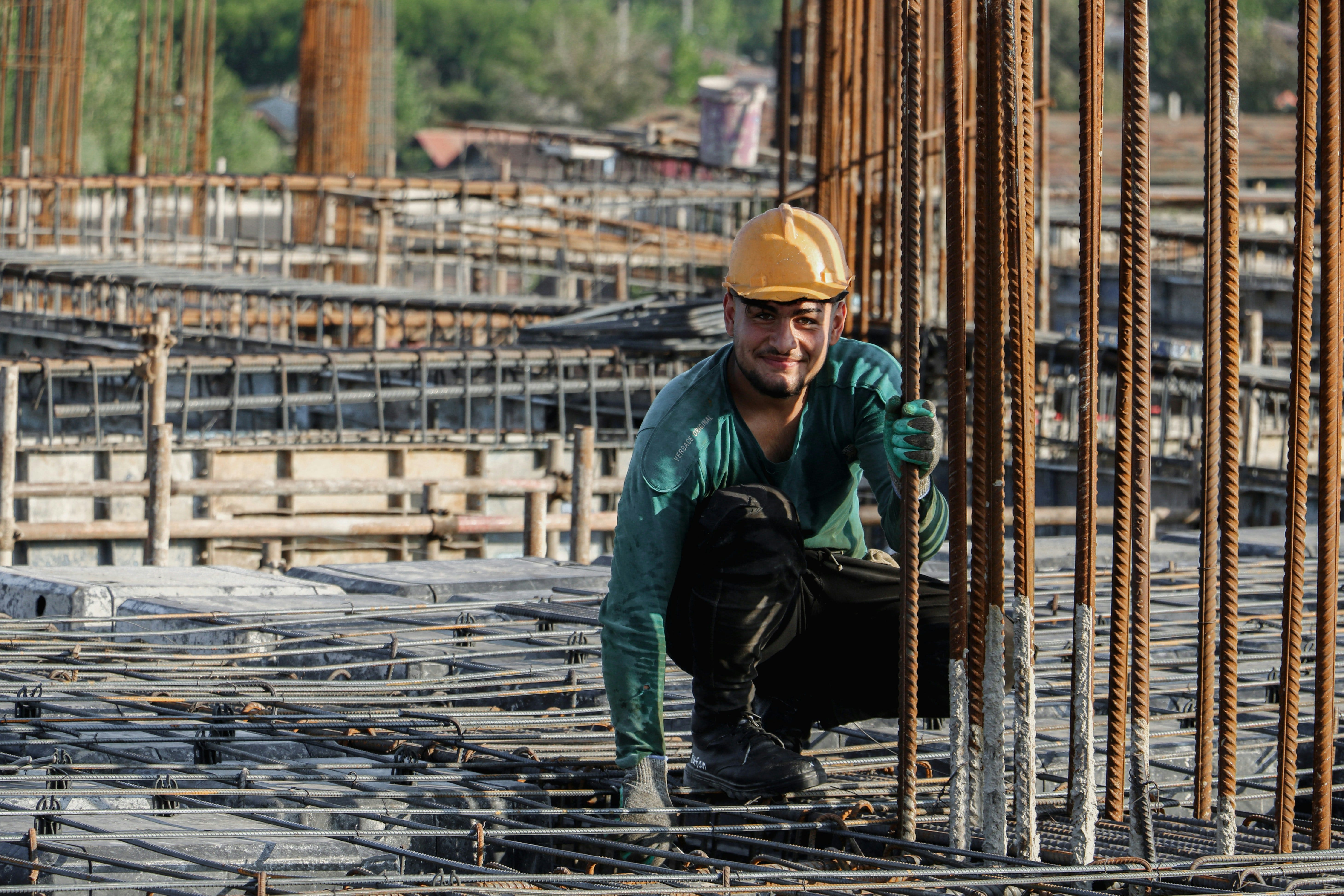
When I was a seminarian in 2015-2019, it was common for people to ask me if I had the thick skin that was necessary in order to be a pastor. I had fun answering the question by telling them that I really was quite thin-skinned, but that I was going to go into the fray anyways. The various reactions were interesting.
But really. It is important for any young man, whether pastor, politician or farmer to develop a thick skin, or to put it in Biblical terminology “a forehead of flint.” (Ezekiel 2:1-3:11) This is part of participating in the school of the Holy Spirit and in the sufferings of Jesus Christ. Even when at the end of the day, you find out with the Apostles that you really are just made of clay (II Cor. 4), it is important that the light of Christ shine out from the cracks of your suffering. (II Cor. 4:6-7) If Paul could get stoned and then left for dead outside of towns, then most of us should be able to be berated and scoffed at for the Name of Jesus in our North American context. Trauma notwithstanding (whatever that is). The coming years will likely demand a tough stock of Christian men to withstand the storm and pressures.
The coming years will likely demand a tough stock of Christian men to withstand the storm and pressures.
The question I want to ask is - how do you do so? How does a young man develop mental, physical, spiritual, emotional toughness? How does he become antifragile? Not that he is never broken open like a clay pot, but even in the midst of the crumbling of pottery, how can the victory of the gospel be seen? The Antifragile man, to use the words of Taleb, is not so much never broken, but as the clay splits, the victory of the gospel is revealed.
True toughness is a gift of God, cultivated through disciplined prayer, consistent worship, and an active reliance on the Holy Spirit.
First of all, every young man must develop disciplines of piety. Toughness is shaped by a delight in the reading of the Scriptures and a reflex to turn in prayer to God. If that “forehead of flint” comes from the Spirit, then it is achieved not by bluster, but by the Spirit of God. The life of any Christian man - pastor, politician, doctor, journalist - should be one of continual reliance on the Holy Spirit. That reliance on the Holy Spirit must arouse one to a holy and pious vigour. “Ora et labora” was the motto of Calvin. It should be our motto, too. While we raise one hand in prayer, we have the other hand to the plow, praying that God would give an increase to the labours of our hands.
While we raise one hand in prayer, we have the other hand to the plow…
The underpinning assumption for all of this first point is that a man ought to be attending weekly corporate worship with the assembly of the believers.
Secondarily, every young man must seek out ways to “stretch” himself. In every area. Mental, physical, spiritual, emotional. It is easy for a young man to focus on his skillset, what he is good at. The academic young men, do academics and ignore physical labour. The young men who are “good with their hands”, do labour with their hands, and may resist picking up a book. The nice Christian boys have a hard time putting themselves in spiritually dangerous situations. It is the niceness that they pride themselves in.
So how about it? If you are spending 6-8 years in post-secondary education, why not work 14 hr days in the hot sun through the summer? If you work 14 hr days through the summer, why not pick up a book on Saturday morning or Sunday evening? If you have spent most of your life in the safety of Christian community and Christian workplaces, why not test your metal by finding an industry that will make you deeply uncomfortable, but in the midst of the uncomfortability you get to be a witness to Christ and also made holier?
Third of all, I recommend forms of fasting. Find something you love and deprive yourself of it for a time. Do so while confessing a sin. If you love coffee, drop it for a week. If you love alcohol, drop it for a month (if you are getting drunk, drop it all together, at least for a time). If you love food and are overeating, don’t eat except for drink water with electrolytes for 24-72 hrs.
Fourth, cultivate joy. In order to cultivate joy, make sure you are repenting of your sins. Nehemiah says in Nehemiah 8:10 “Go your way. Eat the fat and drink sweet wine and send portions to anyone who has nothing ready, for this day is holy to our Lord. And do not be grieved, for the joy of the LORD is your strength.” There is a central place for feasting as well. Feasting is a form of cultivating joy. Make sure that even when things get hard (ie if you are in the 50th hr of a 72 hr fast), that you continue to display and demonstrate joy.
Leadership, especially among holy or godly men demands mental toughness, because it involves a lot of suffering.
Let’s consider leadership on a smaller scale. The father of a home deals with many challenges. The more kids he has, the more sleepless nights, the more responsibility he takes on. A young father needs mental toughness, just to do his duties as a man, to his wife and too his children. It should be a priority for a young man, whether married or unmarried, to be the best he can be in this task, by the grace of God.
With increasing responsibility this toughness of the mind is increasingly important. It increasingly demands humility. Humility, simply put, is obedience to God. Humility is focused on the glory of God. It is not thinking less of yourself, but simply thinking of yourself less. It is not self will, but it is delight in doing the will of God.
If we would start putting more godly men into positions of authority in the church and in the civil sphere, then we need to develop such men in the pew, in the home, in the work sphere, etc. The home is the bootcamp for such men, not only as fathers raise sons, but as fathers find themselves stretched thin on the cross of work, church, family, etc, and then come to life again through the power of Christ. We need to start training ourselves to see a man’s qualifications for leadership in the church and in the public sphere as being ultimately grounded in his ability to rule a home, as we find in the ecclesiastical qualifications of I Timothy 3.
Paul writes to Christians in Hebrews 10:36: “For you have need of endurance, so that when you have done the will of God you may receive what is promised.” He continues in vs. 39: “But we are not of those who shrink back and are destroyed, but of those who have faith and preserve their souls.”
It is a spiritual quality to have grit with a grin.
You may be a pushover, a lightweight, a softy.
You may be a pushover, a lightweight, a softy. The Spirit comes upon a man in his soft and squishy estate so that he might learn to endure hardship in the School of the Spirit. There have been times when I have been a bit of a softy. But then I remind myself that the stakes are high and the time is late and ask the Spirit to come upon me for battle with the forces of evil. Paul says in Ephesians 5:15–16: “Look carefully then how you walk, not as unwise but as wise, making the best use of the time, because the days are evil.”
There is a hymn from the Old United Methodist Hymnal #576:
“Rise up, O men of God!
Have done with lesser things.
Give heart and mind and soul and strength
to serve the King of kings.”
Good fit to my morning devos on 1 Timothy 5. It struck me how much the focus in Churches I grew up in was on Overseers and Deacons being 'worthy of double honor' (:17) without actually testing them. Well, Pasters were tested before they could enter the ministry. Serving as a deacon this led me this morning to basic biblical principles:
"If anyone does not provide for his own, and especially his own household, he has denied the faith and is worse than an unbeliever." (1 Timothy 5:8)
In Christ, Overseers and Deacons sent to serve as a blueprint in the Church (Deuteronomy 25; cf. Luke 20:45-21:4)